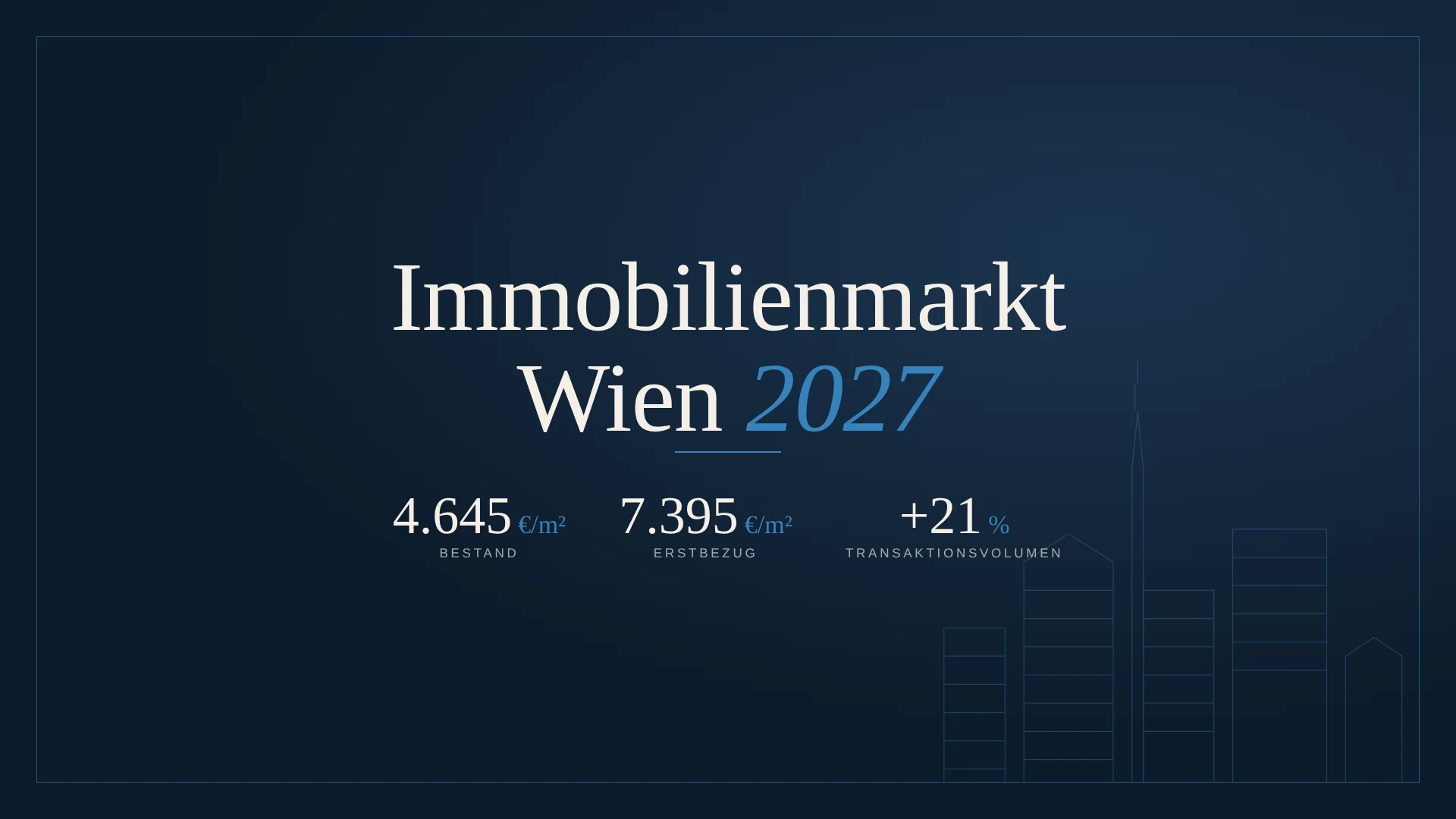
Buying a Zinshaus in Vienna in 2026 means: realistic gross rental yields of 2.5% to 4.5% depending on the district, acquisition costs of roughly 5–6% (3.5% real-estate transfer tax plus 1.1% land-register fee plus contract costs), and a market that in 2025 crossed the one-billion-euro mark again for the first time since 2022, at around EUR 1.04 billion in transaction volume. Investors seeking a classic Gründerzeit Zinshaus as a long-term income property find the highest yields in the districts near the Gürtel (1160, 1170, 1180) and the most stable capital preservation in the inner districts (1010, 1070, 1080, 1090).
For a first, no-obligation look at concrete opportunities, browse the current investment and commercial properties and speak to a specialist – at the end you will find out how to arrange a consultation.
What is a Zinshaus – and why does it remain Vienna's most sought-after investment property?
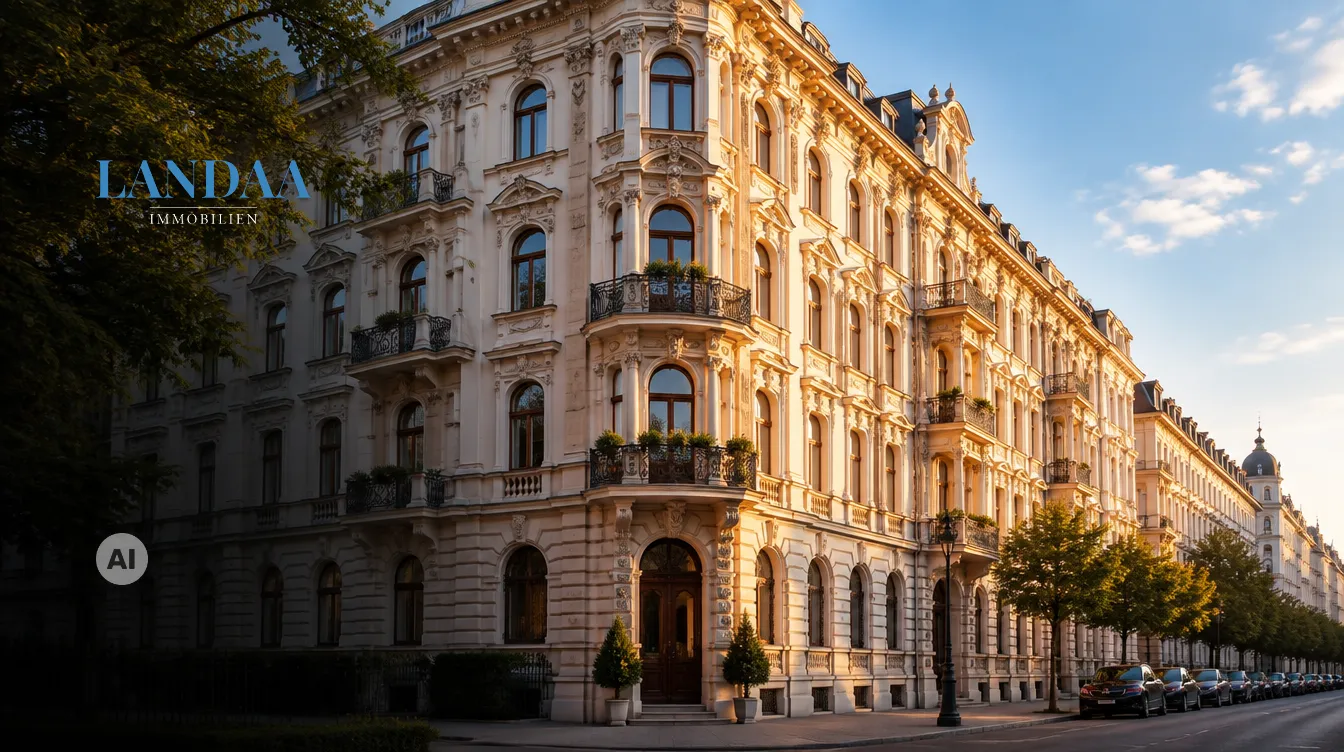
A Zinshaus is a multi-storey residential and commercial building that the owner does not occupy but rents out in full or in large part – "Zins" is the historical German word for rent. In Vienna the term refers above all to the Gründerzeit and turn-of-the-century buildings erected between roughly 1848 and 1918.
These assets combine three qualities that make them so attractive to investors, family offices and international buyers from Europe and the Gulf states:
Substance and scarcity. Gründerzeit Zinshäuser cannot be reproduced. The stock is finite and shrinks every year through loft conversions, refurbishment or subdivision into individual condominiums.
Inflation protection. A tangible asset combined with index-linked leases makes the Zinshaus a classic store of value in uncertain times.
Value-add potential. Loft conversion, letting of vacant units and refurbishment allow the market value to be raised actively – unlike a single condominium.
What yield does a Zinshaus in Vienna generate?
In 2026, the gross rental yield of a Viennese Zinshaus is typically between 2.5% and 4.5%. The net yield – after maintenance, management, vacancy and non-recoverable costs – is usually 0.5 to 1 percentage point lower.
Location is decisive:
Inner districts (1010, 1070, 1080, 1090): well-maintained buildings achieve 2.5–3.5% gross. Lower running yield, but the highest capital preservation and resale liquidity.
Gürtel and outer districts (1160, 1170, 1180): 3.5–4.5% gross is realistic here – the yield lever for active investors.
Repositioning locations (parts of 1020, 1100, 1150): higher initial yield, but more management effort and location risk.
How to calculate the Zinshaus yield
The gross rental yield is calculated as: annual net cold rent divided by the purchase price (including acquisition costs), multiplied by 100.
Worked example: a Zinshaus with an annual net rent of EUR 180,000 and a total purchase price of EUR 5,000,000 (incl. costs) produces a gross yield of 3.6%. For the net yield, deduct roughly 20–30% of the rent for non-recoverable costs.
Important: the realistic yield depends heavily on the tenancy-law status. Pre-1945 old buildings largely fall under the full scope of the Tenancy Act (MRG) with a "Richtwert" reference rent, which caps the achievable rent by law. Freely agreed rents are possible mainly on new lettings, exemptions and newly built loft units. A sound property valuationexamines exactly this rent status building by building.
The best districts to buy a Zinshaus in Vienna
There is no single "best" district – there is the district that fits your strategy.
1010 Innere Stadt: maximum capital preservation, low running yield, the highest entry prices. For investors who prioritise capital protection over cash flow.
1070 Neubau / 1080 Josefstadt: fine-grained, high-quality Gründerzeit substance, strong demand, stable tenants. A balanced ratio of yield and security.
1090 Alsergrund: university and hospital environment, high lettability, solid value development.
1160 Ottakring, 1170 Hernals, 1180 Währing: the classic yield locations. 1180 Währing combines a good address with a still attractive yield profile.
For the "old-building substance versus new-build quality" question, see our article New build or old build in Vienna: What pays off in the luxury segment?.
Financing a Zinshaus: equity, structure and running costs
Zinshäuser are mostly acquired with a mix of equity and debt. For investment assets, Austrian banks generally expect a substantial equity share and value the building by its sustainable income (income-capitalisation approach).
Key cost blocks to plan for before buying:
Acquisition costs: 3.5% real-estate transfer tax, 1.1% land-register entry fee, contract drafting and escrow (notary/lawyer) and, where applicable, agency commission.
Ongoing management: property management, maintenance reserve, insurance, non-recoverable shares.
Capex reserve: Gründerzeit buildings periodically require larger investments (roof, risers, façade, lift). This reserve determines the real net yield.
The tax burden on ongoing rental income follows the personal income-tax rate (for individuals) or corporate income tax (if acquired through a company). A later sale at a profit is generally subject to the 30% real-estate capital-gains tax (ImmoESt) – the main-residence exemption does not apply to a pure investment property. The specific tax structuring belongs in the hands of a tax adviser and lawyer.
The process: seven steps to your own Zinshaus
Define the strategy: cash flow, capital preservation or development (loft conversion/refurbishment)? This determines district and asset type.
Sharpen the search profile: budget, target yield, risk profile, holding period. A registered search request secures access to properties before they go public.
Assess the buildings: rent status per unit, vacancy, structural condition, development potential, existing leases.
Valuation and due diligence: income value, land register, zoning, building file, maintenance backlog.
Structure the financing: equity, bank discussion, possibly an acquisition vehicle (company).
Purchase contract and escrow: contract drafted by lawyer/notary, payment handled via escrow agent.
Land register and handover: registration of ownership, take-over of property management.
Buyers from abroad – especially non-EU citizens – should clarify the property-transfer (Grundverkehr) requirements early. See our guide Buying property in Vienna as a foreigner: Grundverkehr, approval and process.
Buying or selling a Zinshaus – the 2026 market
After two restrained years, the Viennese Zinshaus market turned noticeably in 2025: around EUR 1.04 billion in transaction volume and roughly 348 registered sales marked the return above the billion mark. For 2026, market observers expect a further recovery. For buyers this means more choice and more realistic price expectations than during the boom, but growing competition for prime substance. For owners considering a Zinshaus sale, the window for a structured, discreet sale process is favourable.
FAQ: buying a Zinshaus in Vienna
How much equity do I need for a Zinshaus in Vienna?
For investment properties, Austrian banks typically expect a high equity share and value by sustainable income. The exact ratio depends on the asset, creditworthiness and structure, and should be settled with bank and adviser before the search.
What yield is realistic for a Viennese Zinshaus?
In 2026, gross rental yields are typically 2.5–3.5% in the inner districts and 3.5–4.5% in Gürtel and outer locations. The net yield is usually 0.5–1 percentage point lower.
What does a Zinshaus in Vienna cost?
Prices vary strongly by location, condition and development potential. The purchase price is usually derived from the income value and a price per square metre of usable area; inner districts sit well above outer locations. An object-specific valuation is essential.
Is every Zinshaus subject to the Richtwert reference rent?
No. The Richtwert rent under the MRG mainly concerns pre-1945 old-building rental flats in the full scope of application. Freely agreed rents may apply to new lettings, exemptions and newly built loft units. The status must be checked per unit.
Can non-EU citizens also buy a Zinshaus in Vienna?
Yes, in principle – depending on the property-transfer (Grundverkehr) rules. The requirements and approval process should be clarified before purchase.
Conclusion
Buying a Zinshaus in Vienna is one of the most durable – and most demanding – investment decisions in the Austrian property market. Yield, tenancy status, location and development potential must align building by building. This is precisely where specialist guidance adds value: from discreet sourcing through valuation to a clean closing.
LANDAA Immobilien has advised investors since 2009 from Kärntner Ring 10, 1010 Vienna, on the acquisition and sale of high-quality investment properties. Are you considering buying or selling a Zinshaus? Arrange a no-obligation consultation.