Altbau or Neubau in Vienna – in the luxury segment the short answer is: the renovated Gründerzeit Altbau (period building) in prime locations (1010, 1090, 1030, 1190) offers greater value stability and the highest prestige, because supply is limited and cannot be increased. The Neubau (new-build) wins on energy efficiency, low running costs, warranty and turn-key comfort – and is attractive as a predictable, low-maintenance investment. For the owner-occupier with a sense for character the Altbau usually leads; for the yield-focused investor, often the Neubau. This guide compares both options along value growth, cost, law and return.
Altbau vs. Neubau Vienna: the comparison at a glance
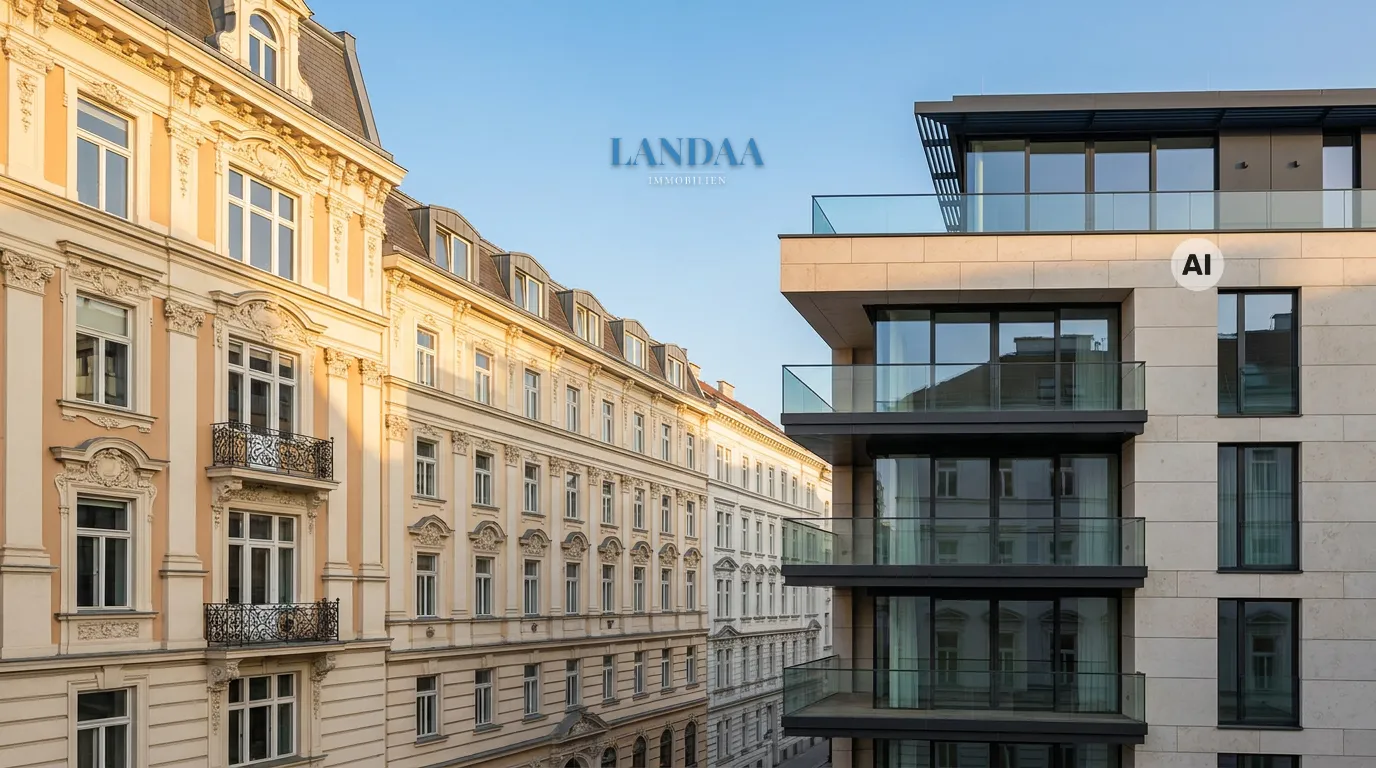
The key differences between Altbau and Neubau in Vienna's luxury segment:
Year built / definition: Altbau – building permit before 1945, or in tenancy law before 30 June 1953; Neubau – built after 1945, in the narrow sense first occupancy.
Ceiling height: Altbau – approx. 3.2–4.0 m with stucco and double doors; Neubau – approx. 2.5–2.7 m.
Location: Altbau – historic core districts, limited supply; Neubau – also urban expansion areas and new quarters.
Energy efficiency: Altbau – usually lower, depends on renovation; Neubau – high, with low running costs.
Running costs: Altbau – tend to be higher; Neubau – tend to be lower.
Warranty: Altbau – limited (existing stock); Neubau – full developer warranty.
Value growth: Altbau – high and stable through rarity; Neubau – solid and predictable.
Effort: Altbau – renovation and maintenance; Neubau – turn-key, low-maintenance.
Both segments have their place in the luxury market – the decision depends on use, time horizon and yield expectation. Anyone weighing the pros and cons of Altbau and Neubau should always relate the criteria to the specific location and their own investment goal.
When is an apartment considered Altbau? The Altbau/Neubau boundary
The most common question first: when does an apartment count as Altbau? In Austria there are two levels.
Architecturally, Altbau means the classic Gründerzeit – buildings erected essentially before 1945, often between 1848 and 1918, with high ceilings, stucco and representative façades. Neubau refers to buildings after 1945, in the narrow sense current new-build projects with first occupancy.
In tenancy law the boundary between Altbau and Neubau runs differently: a building counts as Altbau if its building permit was issued before 30 June 1953 – here the Tenancy Act (Mietrechtsgesetz, MRG) applies in full. The reference-value system that caps rents applies to apartments with a building permit issued before 9 May 1945. What matters is always the date of the building permit, not of completion.
For the buyer of an Altbau condominium this difference matters above all when the apartment is or will be rented – because it determines whether and how strongly the achievable rent is regulated.
Altbau in Vienna: advantages and disadvantages
Vienna's Altbau is a piece of city history – and in the luxury segment a status symbol. Its strengths:
Rarity and location: Gründerzeit houses stand in the historic core districts and cannot be multiplied. This scarcity supports value.
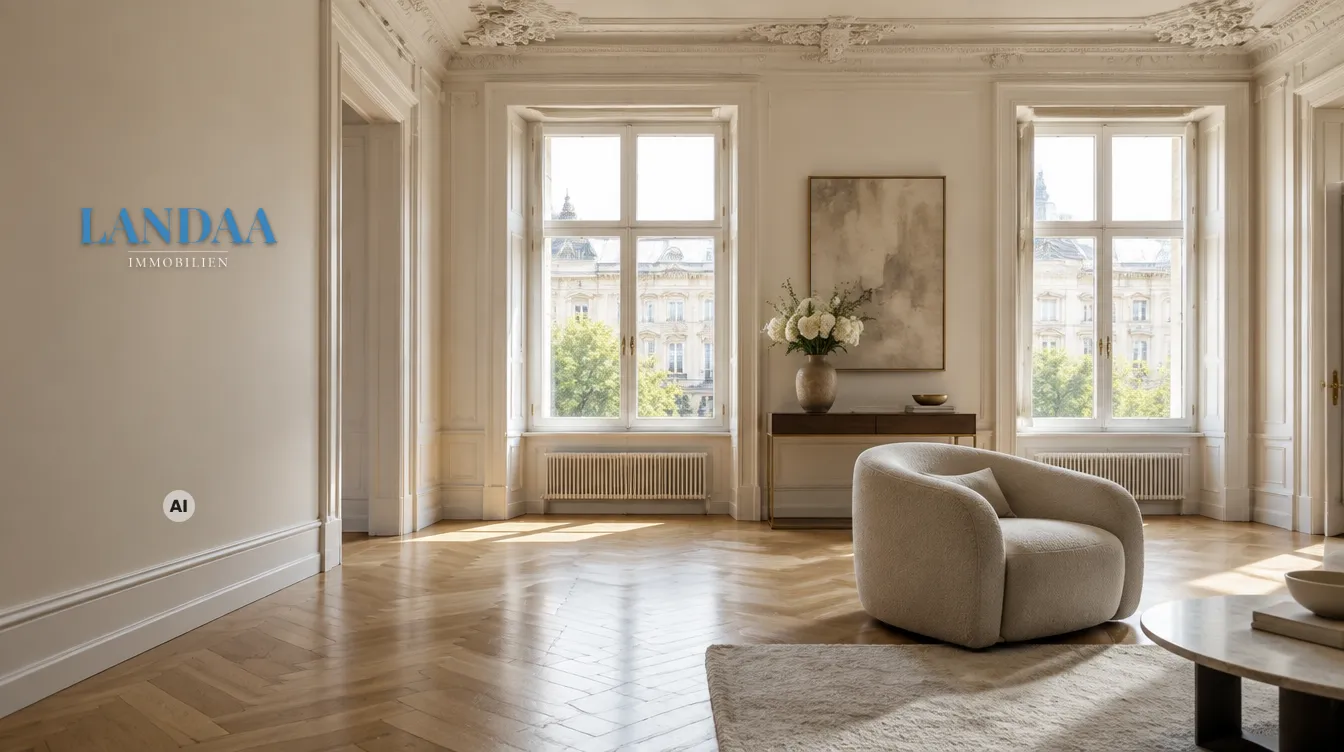
Character: ceiling heights above three metres, stucco, herringbone parquet, double doors and façades a new-build cannot replicate.
Value growth: renovated Altbau apartments in prime locations rank among Vienna's most value-stable properties.
The disadvantages to know:
Energy efficiency and running costs: unrenovated Altbau is energetically weaker; heating and running costs are higher.
Renovation and maintenance: upkeep costs money – windows, pipes, roof. Listed buildings come with restrictions.
Price: the price per square metre for Altbau in Vienna sits in the upper segment in prime locations; renovated first-occupancy units in the 1st district reach peak values.
Neubau in Vienna: advantages and disadvantages
The Neubau plays to its strengths in efficiency and comfort:
Energy and cost: modern insulation, controlled ventilation and efficient heating systems significantly lower running costs.
Warranty and security: buying from the developer follows the Developer Contract Act with statutory warranty – a clear advantage over existing stock.
Comfort: accessibility, lift, underground parking, outdoor space and turn-key first occupancy without renovation effort. Current new-build projects in Vienna can be found in our development projects.
Against this:
Less character: standardised floor plans and lower ceilings.
Location: large new-build projects arise more often in urban expansion areas than in the historic core districts.
Initial value development: the first-occupancy premium can relativise in the first years.
Price per square metre: what does Altbau cost, what does Neubau cost in Vienna?
Price rarely decides alone in the luxury segment – but it orders the options. The price per square metre for Altbau in Vienna varies enormously by district and condition: unrenovated Altbau stock on the edge of town is a different market from a renovated Gründerzeit first occupancy in the 1st district, which ranks among the most expensive square metres in the city. Prime locations such as the 1st, 4th, 7th, 8th, 9th and 19th districts form the upper end.
For Neubau the price is more predictable: first occupancy from the developer is transparently calculated, includes warranty and modern fittings. In comparable locations Neubau and renovated Altbau are often close in price – the Altbau pays for location and character, the Neubau for efficiency and condition.
A reliable price comparison only works property by property. Anyone wanting to buy an Altbau apartment or invest in a new-build should obtain an independent valuation before any decision – listing prices are often above the actual closing price.
Altbau or Neubau as an investment in Vienna?
For the question Altbau or Neubau as an investment in Vienna, the numbers count more than gut feeling – and so does the time horizon.
The Altbau convinces on long-term value growth: location and scarcity act as natural value drivers. The prime example is the Zinshaus – the classic Viennese Gründerzeit apartment building, traditionally among the most sought-after investments in prime locations (e.g. 1010, 1080, 1090). The ongoing Altbau yield is often moderate due to rent regulation, but the value-growth potential is high.
The Neubau delivers predictable, low-maintenance cash flow: higher freely agreed rents (no reference-value cap for new-builds), low upkeep and tax depreciation. For investors seeking yield without renovation risk and with little effort, it is often the more rational choice.
The rule of thumb in the luxury segment: buy Altbau for substance, prestige and long-term value retention; Neubaufor efficiency, predictable yield and minimal effort. Those wanting to combine both find an interesting middle path in renovated rooftop extensions on Altbau substance.
What is better: Altbau or Neubau in Vienna?
Whether you should buy Altbau or Neubau cannot be answered universally – there is no generally better choice, only the one better for your goal. Ask yourself:
Use: owner-occupation with a sense for character → Altbau. Yield with little effort → Neubau.
Time horizon: long-term value retention → Altbau in a prime location. Predictable cash flow → Neubau.
Effort: willing to invest in renovation and upkeep → Altbau. Turn-key without effort → Neubau.
Budget: both segments reach peak prices in the luxury range; location is decisive.
Anyone wanting to buy a luxury apartment in Vienna – whether Altbau or Neubau – should never base the decision on the property alone, but on location, condition, tenancy-law status and their own investment goal – ideally with a sound valuation. If you also want to sell an existing property, our guide to selling an apartment in Vienna will help.
Frequently asked questions (FAQ)
What is better: Altbau or Neubau in Vienna?
For owner-occupiers with a sense for character and long-term value retention, the renovated Altbau in a prime location is usually the better choice. For yield-focused investors with little time for renovation and management, the Neubau is often more rational. Use, time horizon and location are decisive.
When does an apartment count as Altbau?
Architecturally: buildings erected essentially before 1945 (Gründerzeit). In tenancy law: building permit before 30 June 1953 (full MRG application); the reference-value system applies to permits before 9 May 1945.
How high are the ceilings in a Viennese Altbau?
Gründerzeit Altbau buildings typically have ceiling heights of about 3.2 to 4.0 metres, modern new-builds around 2.5 to 2.7 metres.
Is Altbau or Neubau the better investment?
The Altbau usually offers higher long-term value growth through location and scarcity, while the ongoing yield is often moderate due to rent regulation. The Neubau delivers predictable, low-maintenance cash flow with freely agreed rents. The better investment depends on your goal.
Is an Altbau apartment more expensive than a new-build?
In prime locations both segments reach peak prices. Renovated Altbau first-occupancy units in the core districts are among Vienna's most expensive properties; Neubau in a comparable location is often similarly high-priced, but more energy-efficient.
Conclusion
Altbau or Neubau in Vienna in the luxury segment is not a question of right or wrong, but of goal and perspective: the Altbau stands for substance, character and stable value growth, the Neubau for efficiency, comfort and predictable yield. Those who carefully weigh their own use, time horizon and tenancy-law situation make the right choice.
Considering buying or holding an Altbau or Neubau apartment in Vienna as an investment? LANDAA has guided buyers and investors in the premium segment since 2009 – from an objective valuation to closing. Arrange a no-obligation consultation and find out which option fits your goal.
Note: This article provides general information and does not replace individual legal, tax or investment advice.